Flamingo Christmas Light Santa Hat
A Playful Twist That Demands Smart Embroidery Judgment
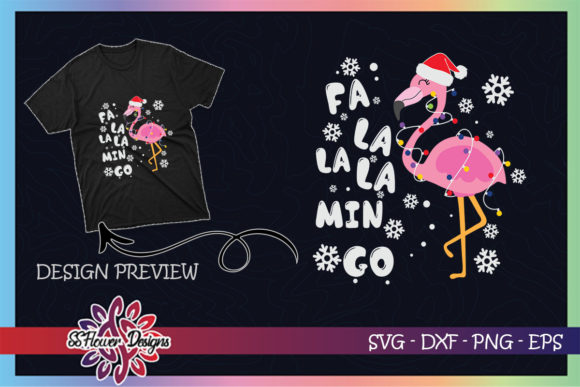
Let’s be honest: when I first opened the Flamingo Christmas Light Santa Hat file, I smiled—but then paused. It’s not your standard holiday motif. A flamingo wearing a jolly red Santa hat, strung with cheerful Christmas lights? Yes, it’s whimsical, unexpected, and instantly memorable. But as someone who’s stitched hundreds of designs for Etsy sellers, boutique apparel lines, and custom baby gifts, I don’t just ask *“Is it cute?”*—I ask *“How will this hold up in thread, on fabric, and in the hands of real customers?”*
First Impressions: Charm With Constraints
The design leans into bold silhouette and rhythmic repetition—the lights form a clean loop around the hat brim, and the flamingo’s pose is upright and centered, making it inherently stable for hooping. As a T-Shirt Designs asset, it reads well at medium scale (3.5–4.5 inches wide), but its personality shines brightest on relaxed-fit items: a cream cotton tote bag, a heather grey sweatshirt, or a soft organic baby onesie. I tested a mockup on a linen tea towel—its clean lines translated beautifully, and the contrast between the flamingo’s curve and the angular lights created subtle visual rhythm.
That said, it’s not universally forgiving. The light bulbs are small, rounded elements—not micro-detailed, but not oversized either. On dense fill-stitch areas (like the hat’s base or the flamingo’s chest), stitch density matters. Too tight, and you’ll lose definition; too loose, and the shape blurs. This isn’t a design for beginners stitching freehand—it’s one that rewards attention to stabilizer choice and thread tension.
Where It Shines—and Where It Needs Guardrails
I used Flamingo Christmas Light Santa Hat on a batch of unisex crewneck sweatshirts for a local craft fair. We chose 100% cotton French terry—medium weight, low stretch—and paired it with tear-away + cut-away hybrid stabilizer. Result? Crisp edges, zero puckering, and delighted customers asking, *“Is that a flamingo… with lights?!”* That moment—where humor meets craftsmanship—is exactly where this design earns its keep.
It works especially well for:
- Embroidered patches (heat-applied or sewn-on for aprons, backpacks, or denim jackets)
- Baby embroidery on burp cloths or knit caps—its friendly scale avoids overwhelming tiny garments
- Holiday gifts like pillow covers or kitchen towels, where charm > realism
- Etsy listings targeting millennial and Gen Z shoppers who love irony with heart
- Small shop product differentiation—stand out from generic snowmen and reindeer without going kitschy
But caution applies in these cases:
- Curved surfaces like structured caps—hoop placement must account for the hat’s tilt and the flamingo’s asymmetry; test on scrap cap panels first.
- Thin or highly textured fabrics (e.g., lightweight rayon or bouclé knits)—the light details may sink or distort without extra stabilization.
- Dark fabric backgrounds—white or pale thread highlights the shape, but dark thread on black fabric risks flattening the lights’ dimensionality. Always preview in grayscale mockups.
- Frequent-wash items like kids’ tees or kitchen towels—reinforce satin-stitch edges (especially the hat rim) and avoid ultra-fine running-stitch outlines unless using high-tenacity thread.
Design Assets That Build Trust—Not Just Traffic
As a designer reviewing Flamingo Christmas Light Santa Hat for commercial use, I looked beyond aesthetics. Its SVG, PNG, DXF, and EPS files mean flexibility—you can resize cleanly for applique design, convert to embroidery file formats, or adapt for printable mockups. But remember: digital embroidery file ≠ ready-to-stitch embroidery file. You’ll still need to digitize for your machine, adjust underlay, and tune pull compensation—especially around the light bulbs’ curves.
This isn’t a plug-and-play machine embroidery design. It’s a strong design asset—one that invites thoughtful interpretation. When used intentionally, it elevates a handmade product from “nice” to “memorable.” Customers remember the smiling flamingo on their holiday tote—they tag friends, share stories, and return for matching gifts. That kind of engagement doesn’t come from complexity; it comes from clarity, confidence, and charm grounded in craft.
Practical Notes Before You Stitch
Before committing thread and time:
- Test on scrap fabric—same weight, same finish, same stabilizer combo you’ll use on the final piece.
- Check thread color contrast early: try the design in black thread on ivory fabric vs. white thread on navy. Which tells the story better?
- Review stitch density in your embroidery software—look for overly dense fills near the flamingo’s neck or light clusters.
- Confirm hoop size compatibility—this design fits comfortably in a 4x4 hoop, but verify before nesting multiple units.
- Inspect small details at 200% zoom: do the light bulbs retain roundness? Is the hat’s pom-pom legible?
- Use proper stabilizer—lightweight cut-away for knits, tear-away for stable wovens, and fusible for layered applications like patches.
- Verify licensing before selling finished items or bundling the digital file—some Graphics licenses restrict commercial redistribution.
In short: Flamingo Christmas Light Santa Hat isn’t just festive—it’s functional, distinctive, and quietly sophisticated in its simplicity. It won’t suit every project, but for the right embroidered patch, sweatshirt, baby gift, or boutique kitchen towel? It adds warmth, wit, and just enough surprise to make your handmade product feel unmistakably yours.